What is Emulsifier? Characteristics and Applications in Animal Feed
Emulsifiers are a key group of additives used across multiple industries including: food, cosmetics, pharmaceuticals and animal feed. They enable immiscible components such as oil and water to blend uniformly, maintain a stable structure, improve texture and extend product shelf life. In modern animal nutrition, lecithin-based emulsifiers not only stabilize feed but also enhance digestive efficiency, support energy absorption and promote gut health. This article provides a comprehensive overview of the concept, properties, classification and applications of emulsifiers, with a particular focus on their critical role in the livestock and poultry sectors.
What are emulsifiers? Role across manufacturing industries
Emulsifiers are a class of compounds capable of linking two immiscible phases (such as oil and water) into a stable mixture. Their molecular structure typically features a hydrophilic head and a lipophilic tail, allowing them to position themselves at the interface and act as a bridge between the two phases.
Key functions of emulsifiers include:
-
Stabilizing product structure, preventing phase separation
-
Enhancing solubility, ensuring uniform dispersion of ingredients
-
Improving sensory properties, such as texture and smoothness
-
Optimizing nutrient absorption in animal feed
-
Reducing production losses, enhancing final product quality
Owing to these unique characteristics, emulsifiers play a pivotal role as a key ingredient across a wide range of contemporary production processes.
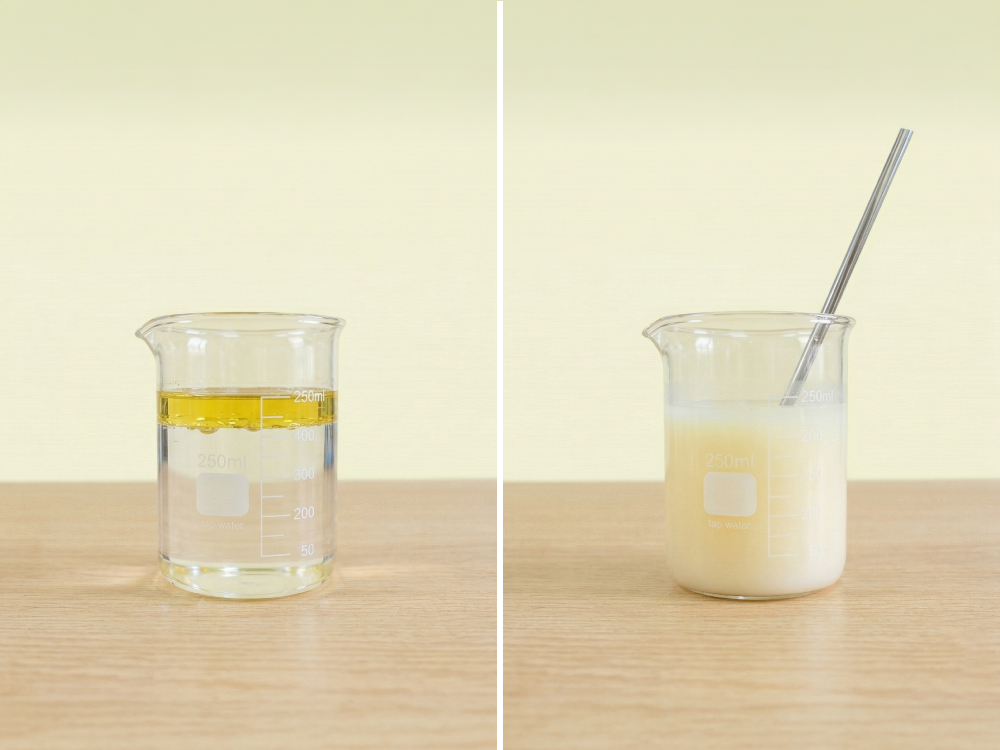
Emulsifiers help oil and water blend, forming a stable structure in food and animal feed
The mechanism of action of emulsifiers through its hydrophilic, lipophilic structure
Each emulsifier molecule consists of two parts:
-
A hydrophilic head that attracts water molecules
-
A lipophilic tail that attracts oil molecules
When added to a mixture, these molecules arrange themselves around oil droplets, forming a protective layer that stabilizes the dispersion of oil in water and vice versa. This micelle formation creates a uniform, stable mixture that resists separation under heat or mixing.
Outstanding attributes of emulsifiers
Surface tension reduction
Emulsifiers lower the interfacial tension between oil and water, enabling two phases to blend easily and remain homogeneous.
Increases interfacial area and enhances dispersion
Disperses oil droplets and fat particles into finer sizes, increasing interfacial area and ensuring long-term emulsion stability.
Create diverse structures and shapes
Depending on the chemical nature and the surrounding phase, it can form:
-
Spherical droplets
-
Cylindrical shapes
-
Surface-coating films
Prevent aggregation and maintain stability
Emulsifier molecules adsorb onto the surface of oil droplets, forming a protective layer that prevents aggregation and phase separation.
Enhances physical properties
Such as smoothness, elasticity, foam stability and viscosity, which are crucial in food, cosmetics and animal feed.
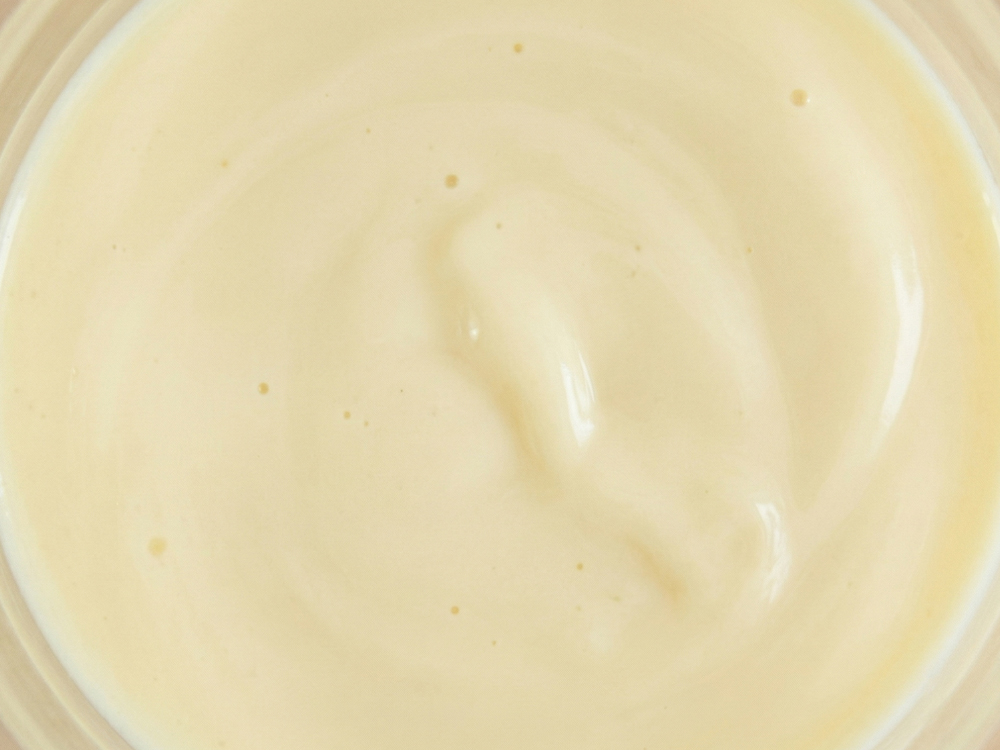
Emulsifiers create a smooth and uniform texture, improving product stability and nutritional value
Classification of emulsifiers
By polarity
-
Strongly polar emulsifiers
-
Weakly polar or non-polar emulsifiers
By dispersed phase ratio
-
Dilute emulsion (0.1% dispersed phase)
-
Concentrated emulsion (~74%)
-
Highly concentrated emulsion (>74%)
Special types
-
Complex emulsions: O/W/O (oil/water/oil) or W/O/W (water/oil/water)
-
Microemulsions: extremely small droplets, transparent
-
Colloidal state: intermediate between complete solubility and opaque emulsion
Common emulsifiers
-
Soybean lecithin, Sunflower lecithin (natural)
-
Monoglyceride, diglyceride
-
Polysorbate, ester sorbitan
-
Natural Gum (CMC, xanthan…)
Lecithin emulsifier and key properties
What is Lecithin?
Lecithin is a natural mixture of phospholipids, containing components such as phosphatidylcholine, phosphatidylethanolamine and phosphatidylinositol. It serves as an essential source of fat for cell development, nervous system function and metabolic processes.
Technical properties of Lecithin
-
Excellent emulsifying ability in both O/W (oil-in-water) and W/O (water-in-oil) systems.
-
Strong antioxidant properties due to its phospholipid structure.
-
Softens and enhances the flexibility of the product.
-
Enhances the solubility of hydrophobic compounds.
Common types of Lecithin
-
Soybean lecithin
-
Sunflower lecithin
-
Liquid lecithin, powdered lecithin, deoiled lecithin
-
Food-grade and feed-grade lecithin
In animal feed production, liquid lecithin is widely used due to its high compatibility with oil-based bases and its ability to support digestion effectively.
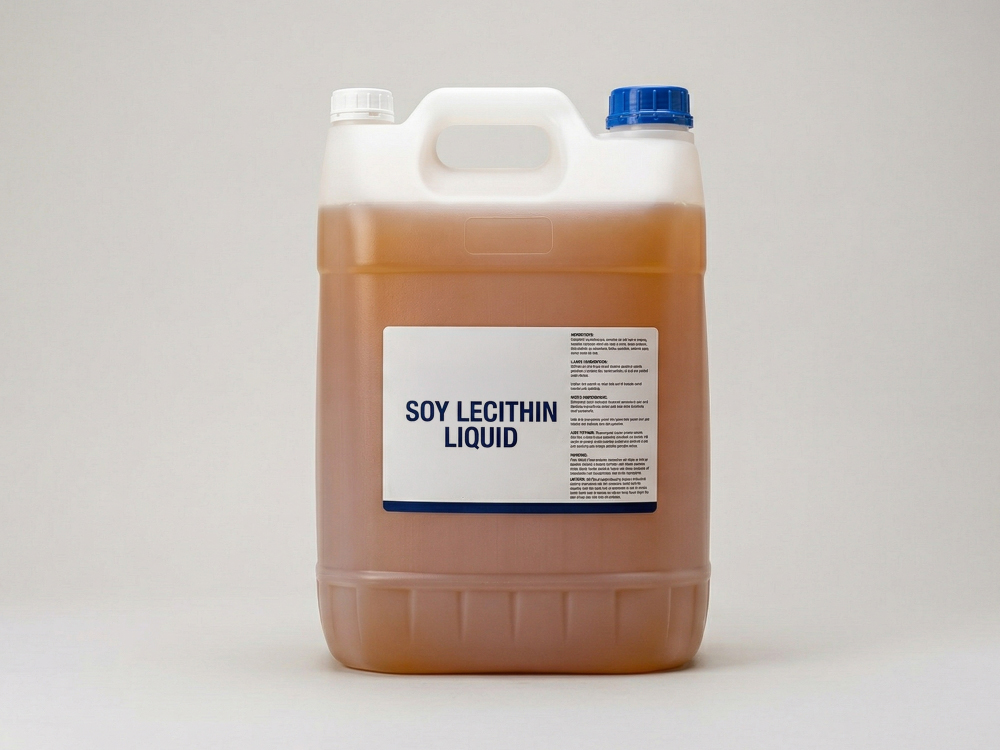
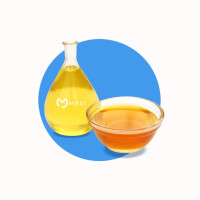
Lecithin is a natural emulsifier that stabilizes feed, enhances digestions and improves livestock performance
Applications of lecithin emulsifiers in animal feed
Currently, the main applications focus on feed-grade lecithin, particularly in the processing of compound feed, premixes, pellets and aquafeed.
Enhanced fat digestion and absorption
Lecithin emulsifiers reduce the size of oil droplets, allowing lipase enzymes to work more efficiently, which helps piglets, poultry and aquatic animals absorb fats optimally.
Improved Feed Conversion Ratio (FCR)
With effective emulsification, animals utilize more energy from the same feed ration, reducing feed costs while increasing overall productivity.
Stabilized feed pellet structure
-
Minimizes dust generation, increases pellet durability
-
Enhances uniformity and fineness in premix blends
Supports liver and digestive health
-
Choline in lecithin supports lipid metabolism, reducing fat accumulation in the liver
-
Promotes gut health and enhances the animal's natural immune system
Safe and natural
As a natural emulsifier, lecithin ensures safety and aligns with sustainable farming practices, making it suitable for export-oriented farms.
Applications of emulsifiers in food, cosmetics, and pharmaceuticals
In food
-
Cereals, baked goods: Enhance gas retention, increase volume, improve softness and extend shelf life.
-
Milk, cream: Stabilize protein and fat dispersion, improve foaming, prevent separation.
-
Confectionery, chocolate: Reduce viscosity, increase smoothness, facilitate molding.
-
Mayonnaise, sauces: Stabilize oil-in-water mixtures, improve texture, prolong shelf life.
In cosmetics
Cleansers, moisturizers, sunscreens: Blend oil and water phases, create smooth textures, absorb quickly, avoid greasiness.
In pharmaceuticals
Topical creams, ointments and gels: Enhance drug solubility and absorption, improving treatment effectiveness.
>> See more: Storage guidelines for lecithin additives in livestock industry
Regulations on emulsifier dosage
Although most emulsifiers are considered safe, there are established standards for ADI (Acceptable Daily Intake):
-
Sodium 2-lactylate: 20 mg/kg body weight/day
-
Ester sorbitan: 25 mg/kg body weight/day
-
Polyglycerol polyricinoleate: 7.5 mg/kg body weight/day
In animal feed, lecithin is commonly used at 1 - 5 kg per ton of feed, depending on the type of livestock and the feed formulation.
Masi provides high-quality lecithin for the animal feed industry
Emulsifiers are essential additives across various industries such as food, pharmaceuticals and cosmetics, ensuring products remain stable, smooth, appealing and safe. In modern animal nutrition, lecithin not only stabilizes feed structures but also enhances fat digestibility, supports gut health and optimizes feed costs.
A clear understanding of the properties and applications of emulsifiers enables businesses, manufacturers and end-users to select the most suitable type, thereby improving production efficiency and product quality. Masi offers premium lecithin emulsifiers designed to meet the requirements of animal feed production facilities. We partner with feed companies to optimize nutrition, boost livestock performance, and develop products that meet international quality standards. Contact Masi today for detailed consultation and product information.
--------------------------------------
Contact information:
Masi
-
Office: 7th Floor, Giga Mall, 240–242 Pham Van Dong Street, Hiep Binh Ward, Ho Chi Minh City
-
Factory: Lot C11, Fish Sauce Processing Zone, Phu Thuy Ward, Lam Dong Province
-
Factory: Hoi Hamlet, Kim Son Commune, Dong Thap Province
Email: Cs@masi.vn
Call center: (+84) 288 994 8686
Facebook: https://www.facebook.com/masi.fishmeal
Featured posts
-
-
-
 07.04.2023
 -
 22.04.2023
 -
 13.05.2023
 -

-
 10.06.2023
 -

-
 28.07.2023
 -

-
 30.09.2023
 -

-

-
 01.12.2023
 -
 30.12.2023
 -
-
-
-
-
-
-
 18.05.2024
 -
-

-

-
 21.09.2024
 -
 01.10.2022
 -

-

-
 30.08.2023